Why Self-Awareness Should Come Before Confidence in Young People
Published 16 October 2026
Why Self-Awareness Should Come Before Confidence in Young People
We talk a lot about building confidence in young people. We encourage them to speak up, believe in themselves and step outside their comfort zones. All of that matters, but I've increasingly wondered whether we're sometimes starting in the wrong place.
Before asking a young person to be more confident, shouldn't we first help them understand themselves?
It's something I've spent a lot of time thinking about while developing Finding Your Voice.
When a pupil rarely contributes to discussions, struggles to express how they're feeling or seems reluctant to engage, it's easy to focus on what we can see. We might encourage them to speak more or get involved, but I wonder how often we consider what's happening beneath the surface.
Perhaps they don't fully understand their emotions. Perhaps they're unsure of their own strengths, or worry so much about what others think that expressing themselves feels difficult.
In those circumstances, telling someone to be more confident might not address what's holding them back.
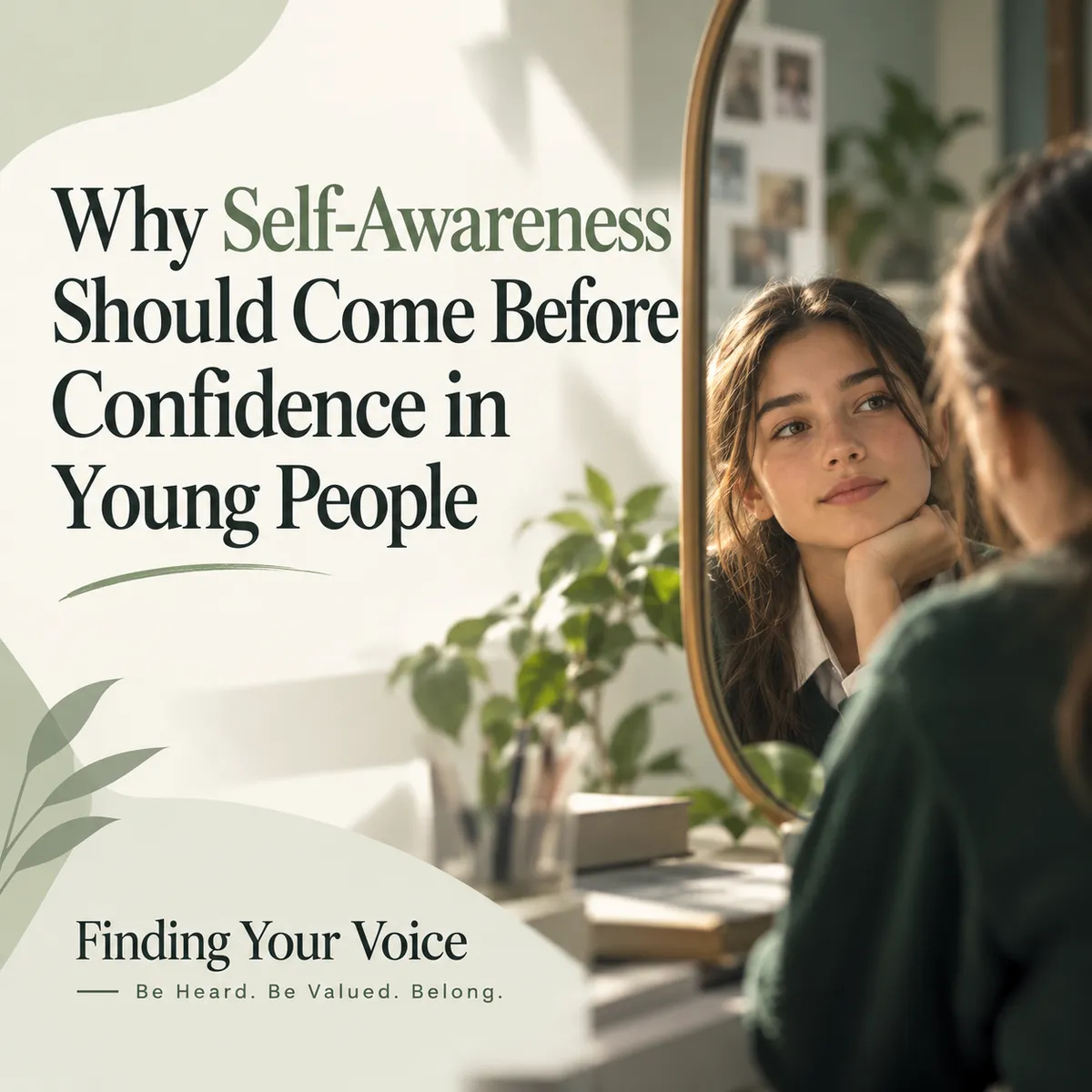
One of the ideas at the heart of Finding Your Voice is holding up a mirror. Not to tell young people who they should be, but to give them space to recognise who they are.
Through guided reflection and conversation, young people can explore their thoughts, feelings, strengths and relationships without the pressure of finding a right or wrong answer.
I believe that space matters. When someone begins to recognise an emotion, they may find it easier to communicate. When they identify their strengths, they may feel more comfortable contributing. And when they understand their reactions, they have more opportunity to choose how to respond.
That's why I've developed Finding Your Voice as a small-group intervention. I wanted to create an environment where young people can reflect, listen, connect and gradually develop a deeper understanding of themselves.
I also recognise the pressures schools face to demonstrate progress. Attendance, attainment and engagement all matter. But I think we need to leave room for the kinds of personal development that don't always show up immediately in those measures.
A young person recognising a feeling they've struggled to name, sharing a thought in a group or beginning to see their own value may not seem like a dramatic change. I wouldn't underestimate any of those moments.
I'm not suggesting that self-awareness automatically creates confidence, or that every pupil follows the same path. But I believe it can provide an important foundation.
Perhaps we need to spend a little less time asking how to make young people confident, and more time giving them opportunities to understand who they are.
Because finding your voice isn't just about speaking. It's about understanding what you want to say and believing that it matters.
Be Heard. Be Valued. Belong.
If you'd like to explore how Finding Your Voice could support young people in your school, you can find out more about the programme or book a conversation to discuss how it might work for your pupils.


